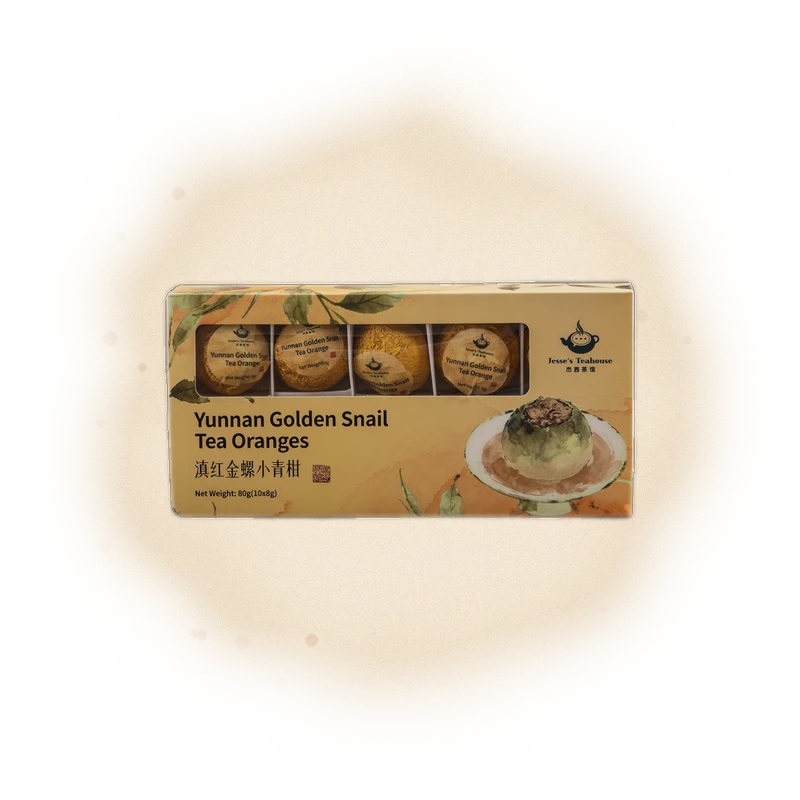
Golden Snail Red Tea Oranges (Jesse’s Tea Orange Series)
賣家: jesse s teahouse
商品介紹
Yunnan Golden Snail Red Tea Oranges (Jesse’s Tea Orange Series) Note: Seeing “Out of Stock”? They might just not be available in your market yet! Check the Launch Month Living Blog to see the status for each of our warehouses. What is a Tea Orange? Tea oranges, known as “Xiao Qing Gan” in Chinese, are tea leaves packed inside a special type of fragrant mandarin orange grown specifically for its aromatic peel. The inside flesh of the fruit is scooped out, the peel is dried, and then filled with loose leaf tea. The result is a fantastic citrus scent during brewing, and a smooth, natural orange note in the tea. The tea oranges in this series are the end result of over a year’s worth of tea scouting and sourcing, where I went in person to the orange fields and the tea mountains to find the best ingredients, put them together, and develop a complete line of amazing flavors, including both classics and innovative unique tastes. What’s in the Box? Each box contains ten tea oranges (between 100-120g total), filled with Golden Snail Red Tea. Golden Snail is named for the beautiful, curled leaves which look like snail shells before they open into full loose leaves. Ours is grown in Yunnan, and their small shape means efficient packing and bold flavor. This tea was a surprise favorite of the team, with a fantastic clean malty flavor that melded beautifully with rich honey notes. A delicate floral fragrance mixes with the citrus peel fragrance. Flavor-wise, the sweetness and crispness of the tea matches fantastically with our oranges, and the citrus notes are balanced very nicely alongside the gentle tannins of the red tea. What is Red Tea? Red tea is called “black tea” in the West, so if you’ve tried Earl Grey or English Breakfast, the flavor should be familiar to you. It is made by hand-picking the leaves, withering them to remove moisture, rolling the leaves to break cell walls and release flavor, and then left to oxidize and ferment for several hours or up to overnight. This deepens flavors and gives red teas their classic malty, sweet, and very slightly tannic flavor, as well as a rich orange color. Then, the leaves are gently heated to dry them out and make them suitable for long term storage. Red tea is a fantastic choice for beginner tea drinkers because it is very familiar to the palate of tea drinkers around the world. Not sure which flavors you like? Try the 5-orange sampler! Why Make Our Own Tea Oranges? While tea oranges are not difficult to find in China, they are usually filled with lower quality tea, with most vendors hoping the interesting shape will be enough to attract customers. Eventually, we decided that if we wanted higher quality tea oranges, especially those that would pass EU export standards for pesticides, we needed to start from scratch. We sourced the oranges, sourced the teas, put the tea in the oranges, and made our own line of products that simply can’t be found anywhere else! Our Orange Guy: Jie Ge Jie Ge is a third-gen tea orange farmer from Xinhui, China, the best location in all of China to grow tea oranges, thanks to its unique geographical position in a rich flood plain and their special varietal of orange. His family has been growing and aging oranges for decades. The orange varietal he grows has 27 volatile scent compounds contained in the dried peel, compared to normal oranges which have under 10. Jie Ge’s oranges come from the core area of Meijiang and are grown fully organic, using only organic fertilizer he makes himself by fermenting ingredients like peanut shells, soybean powder, fish and fish bones, seashells and seaweed, amongst other ingredients. Our Tea Lady: Tian Zong Tian Zong has been in tea tasting and sourcing for over twenty years, and has spent much time in the last decade helping local farmers grow to organic and EU export standards, as a way of increasing incomes for farmers and helping them reach overseas markets. Tian Zong connected us directly to local farmers, and serves as our quality-control specialist for making sure all teas fit the highest standards of pesticide, heavy metals, and other health-related topics. She also ensures the farmers get the proper export papers needed. In addition, Tian Zong is also a certified tea-tasting expert, as granted by the Ministry of Human Resources and Social Security. Her insight on which types of teas might be a good fit for the Tea Orange Series was very valuable. Jesse and the team testing tea oranges in Changsha Pesticide Testing: Best-In-The-World Quality Jesse Says: I spent over $4000 on pesticide testing for these products so they would pass EU regulations, which are the toughest on the planet. The challenge for orange peels to pass pesticide testing is immense because the peel stays on the fruit all throughout its growth. This means any pesticides used on them accumulate, and so virtually no chemical pesticide can be used during the growing process. Jie Ge uses natural methods on his farm to resist pests, incl